
If you’re planning a new website, understanding the process helps you know what to expect at each stage what you need to provide, how long each phase realistically takes, and where delays usually come from. This isn’t about coding methodology; it’s the practical journey from “we need a website” to a live site bringing in business.
Table of Contents
The 7 Stages of the Web Development Process
| Stage | What Happens | Who’s Involved |
| Discovery | Define goals, audience, and scope | You + project team |
| Planning & wireframing | Map out structure and user flow | Project team |
| Design | Visual design, branding, UI | Designer |
| Frontend development | Build what users see and interact with | Developer |
| Backend development | Build the server-side logic and data | Developer |
| Testing & QA | Cross-browser, cross-device checks | QA team |
| Launch & post-launch | Go live, then monitor and refine | Full team |
Discovery: Getting the Brief Right
This is the stage most businesses want to rush and the one that causes the most expensive problems when it’s skipped. Discovery means agreeing on what the website actually needs to do: is it generating leads, selling products, or building credibility? Who’s the audience? What does success look like, more enquiries, lower bounce rate, faster load times?
Skipping this step in the web development process and jumping straight to design usually means expensive scope changes later, once everyone realises the site was being built for the wrong goal.
Planning & Wireframing
Before any visual design happens, the site structure gets mapped out a wireframe, essentially a blueprint showing where content and features sit on each page, without colours or branding yet. This is also where you define your MVP: the core pages and features needed to launch, versus the “nice to haves” that can come in a later phase.
Design: Making It Look Right
Once the structure is agreed, design brings in your branding colours, typography, imagery, and the overall feel of the site. Good design isn’t just aesthetics; it directly affects how long visitors stay and whether they convert. This stage should also account for mobile responsiveness from the start, not as an afterthought the majority of UK web traffic now comes from mobile devices.
Development: Frontend and Backend
This is where the actual build happens, in two parallel tracks:
- Frontend: everything the visitor sees and clicks: layout, buttons, forms, animations.
- Backend: the invisible infrastructure handling data, logins, forms, and any integrations with other systems.
For a straightforward business website, this stage is usually straightforward. But if your site needs to talk to a CRM, booking system, or other business tools, this is where those integrations get built and it’s worth flagging early, since it affects timeline and cost.
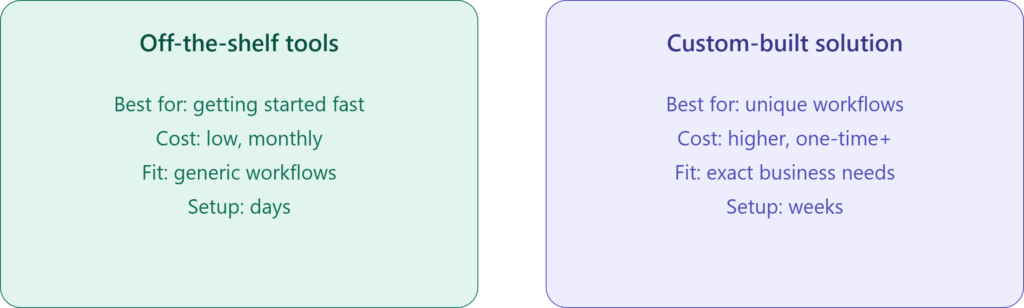
If your project is closer to a web application than a marketing website user accounts, dashboards, complex functionality it’s worth reviewing our web and mobile app development service, since that’s a different scope of build than a standard business website.
Testing & QA: Catching Problems Before Your Customers Do
Before launch, the site gets tested across browsers (Chrome, Safari, Firefox, Edge) and devices (desktop, tablet, mobile) to catch inconsistencies. This stage also covers broken links, form functionality, page speed, and security checks. Skipping thorough testing is how businesses end up with customers reporting bugs instead of catching them internally first.
Launch and What Comes After
Launch isn’t the finish line it’s the start of the site actually doing its job. Once live, the site needs:
- Reliable hosting that can handle traffic without slowing down or going offline
- Analytics and tracking set up correctly from day one, so you can see what’s actually working
- SEO fundamentals in place technical SEO, sitemaps, and search engine indexing
- Ongoing maintenance updates, security patches, and monitoring
Reliable hosting and infrastructure matter more than most businesses expect at this stage a slow or unstable site undoes a lot of the work that went into the earlier phases. Our cloud infrastructure service covers exactly this: making sure what you’ve built stays fast and available once it’s live.
When a Website Isn’t Enough
Sometimes what starts as “we need a website” turns out to need more a customer portal, an internal dashboard, or a system connecting multiple tools together. If that’s where your project is heading, it’s worth a conversation with our custom software team early, rather than bolting complexity onto a website build that wasn’t scoped for it.
Common Mistakes That Cost UK Businesses Time and Money
These are the most common mistakes UK businesses make in the web development process:
- Skipping discovery to “get started faster” usually costs more time later in rework.
- Designing before agreeing on structure leads to redesigns once the wireframe reveals gaps.
- Treating mobile as an afterthought most UK traffic is mobile-first in 2026.
- Under-investing in hosting a beautiful site that loads slowly loses visitors before they see it.
- No plan for post-launch a site that’s never updated starts falling behind in search rankings within months.
Get Started
A well-run web development process follows this sequence from day one not because it’s bureaucratic, but because it’s the difference between a site that works and one that needs fixing six months after launch. If you’re planning a new site and want a clear, honest scope before committing to a build, get in touch with our web development team.